

Feeling empty can be difficult to describe.
It does not always feel like sadness; it may feel like numbness. Disconnection. Quiet distance from emotions or purpose.
When you understand the 7 emotional triggers behind eating when you feel empty, you experience peace and security.
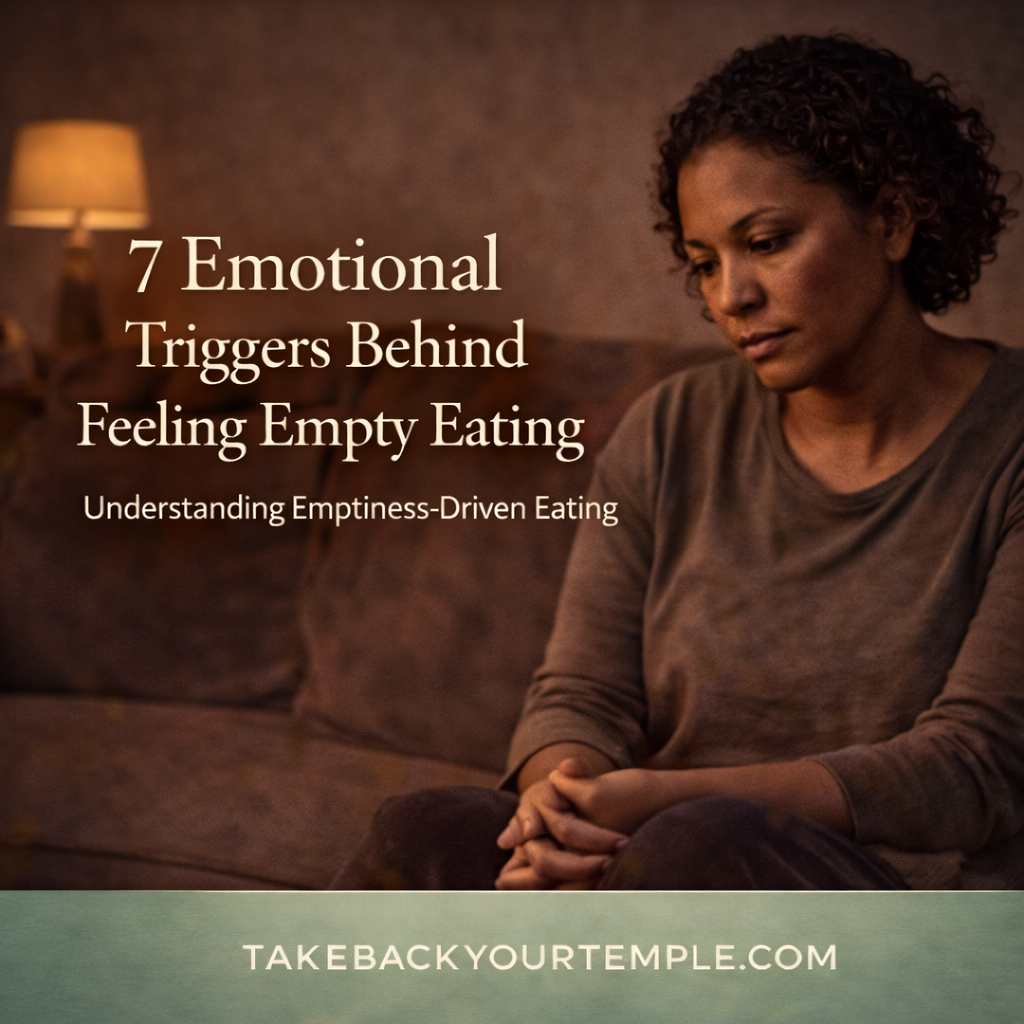
Understanding the Emotional Triggers Behind Eating When Feeling Empty
If you have ever reached for food during moments when you felt emotionally flat or disconnected, you may have wondered:
Why do I eat when I feel empty even when I am not hungry?
Emptiness-driven eating often overlaps with boredom eating, loneliness eating, sadness eating, and nighttime eating. Understanding the emotional signals behind emptiness helps reveal why food becomes appealing during these quiet moments.
If this pattern happens often in your life, this deeper guide can help explain the connection:
→ Read next: Why Do I Feel Empty and Eat Anyway?
Below are seven emotional triggers that commonly drive feeling empty eating.
Trigger #1: Emotional Disconnection From Yourself
Emptiness often begins with disconnection.
You may feel separated from your own emotions, needs, or desires.
This disconnection can happen after long periods of stress, responsibility, or emotional suppression.
Food becomes appealing because it provides a physical sensation that interrupts emotional distance.
This trigger frequently overlaps with boredom eating.
→ Related reading:
7 Emotional Triggers Behind Boredom Eating
Trigger #2: Loss of Purpose or Direction
Feeling empty sometimes reflects uncertainty about direction.
You may feel unsure about goals, identity, or next steps.
When purpose feels unclear, emotional energy may decline.
Food becomes comforting because it creates predictable pleasure during uncertain moments.
This trigger often overlaps with sadness eating.
➡ Read also: 7 Emotional Triggers Behind Sadness Eating
Pause and ask:
What area of my life feels empty right now?
Naming emotional emptiness creates clarity.
Understanding emotional signals helps uncover the true reason behind repeated eating patterns.
The Healing Insight Audit helps identify emotional drivers behind emptiness-driven eating.
→ Begin here: Take the Healing Insight Audit
Trigger #3: Emotional Numbness After Prolonged Stress
After extended stress, emotional shutdown may occur.
Instead of feeling overwhelmed, emotions may become quiet or flat.
This emotional numbness creates internal distance.
Food becomes appealing because it stimulates sensation during emotional dullness.
This trigger frequently overlaps with stress eating.
→ Related reading:
7 Emotional Triggers Behind Stress Eating
Trigger #4: Loneliness That Feels Quiet Rather Than Obvious
Not all loneliness feels intense.
Some loneliness feels subtle and persistent.
You may feel surrounded by people yet internally disconnected.
Food becomes comforting because it fills emotional silence.
This trigger strongly overlaps with loneliness eating.
→ Related reading:
7 Emotional Triggers Behind Loneliness Eating
Trigger #5: Lack of Meaningful Emotional Engagement
Emptiness often grows when daily life feels repetitive or unfulfilling.
Routine without emotional engagement can create internal distance.
You may move through responsibilities without feeling emotionally connected.
Food becomes appealing because it provides brief stimulation and pleasure.
This trigger frequently overlaps with reward eating patterns.
Trigger #6: Spiritual Disconnection or Inner Drift
Emptiness sometimes reflects spiritual fatigue.
You may feel distant from purpose, calling, or inner peace.
This creates a quiet internal gap.
Food becomes comforting because it provides immediate relief during moments of inner drift.
This trigger often overlaps with comfort eating.
→ Related reading:
7 Emotional Triggers Behind Comfort Eating
Trigger #7: Quiet Evenings That Magnify Emotional Distance
Emptiness often becomes more noticeable during stillness.
Evenings create space for reflection.
Without distractions, emotional distance becomes visible.
Food becomes appealing because it fills silence.
This trigger strongly connects to nighttime eating.
→ Related reading:
9 Emotional Triggers that Cause Night Eating
How Feeling Empty Eating Connects Across Emotional Patterns
Feeling empty rarely exists alone.
It often overlaps with:
• Boredom eating
• Sadness eating
• Loneliness eating
• Comfort eating
• Stress eating
• Night eating
Understanding these connections helps reveal emotional needs beneath repeated eating patterns.
Awareness leads to clarity.
Clarity creates opportunity for restoration.
Feeling empty often signals emotional or spiritual distance rather than physical hunger.
Your body may be asking for connection, purpose, or restoration.
The Healing Insight Audit helps uncover emotional roots behind your eating patterns and provides a faith-aligned starting point toward healing.