

If you’ve ever wondered, “Why do I eat for comfort?” consider this: Many people eat for comfort when they feel overwhelmed, lonely, tired, or emotionally depleted. Comfort eating happens when food becomes a source of emotional relief rather than physical nourishment. It temporarily soothes discomfort, but the relief often fades quickly, leaving the underlying emotional need unresolved.
If eating for comfort feels confusing, these emotional signals may provide clarity:
→ Read next: 7 Emotional Triggers Behind Comfort Eating
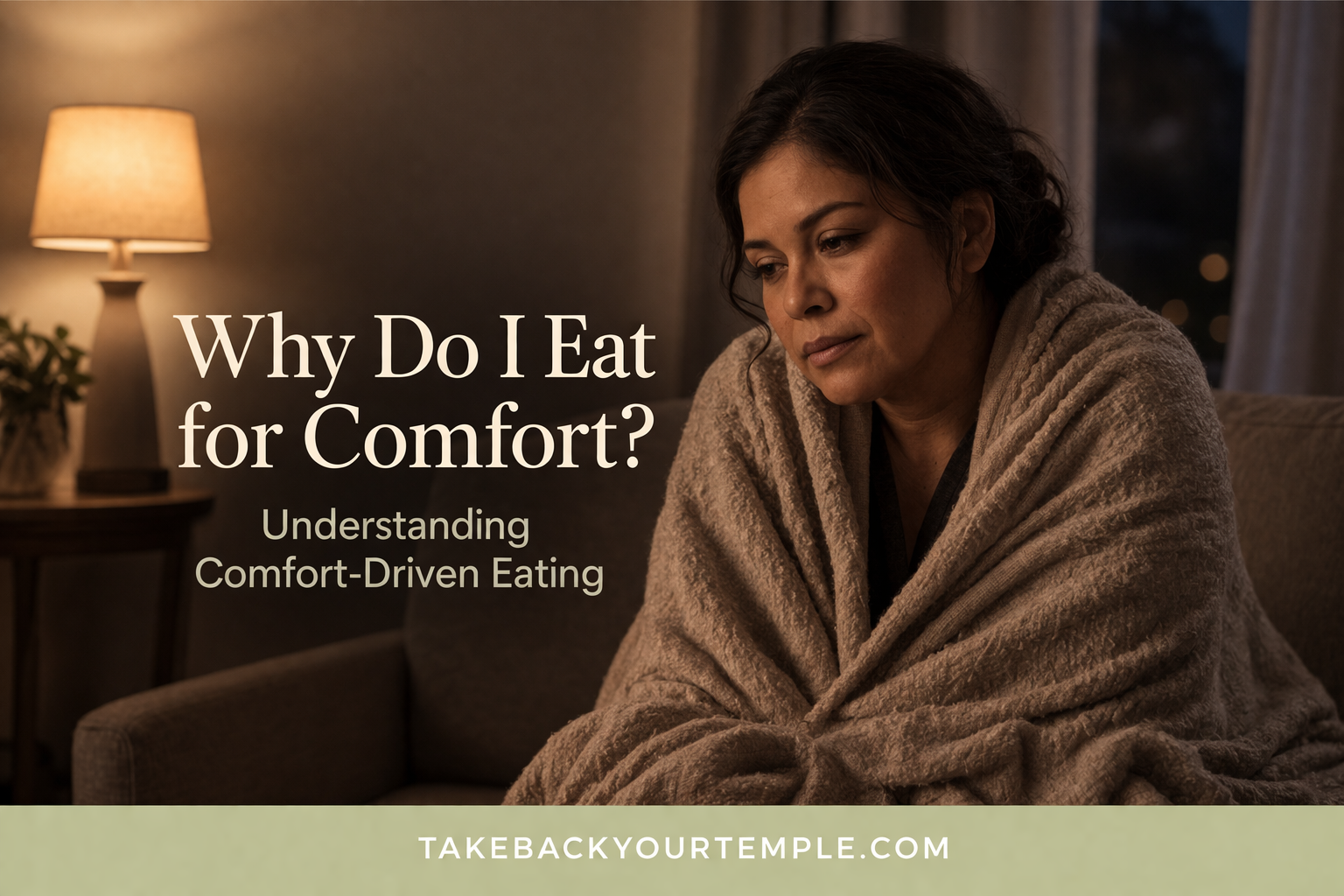
Have you ever reached for food when your heart felt heavy or your energy felt drained?
Not because your body was hungry.
Because your emotions needed relief.
Comfort eating often feels gentle at first. It feels soothing. Familiar. Predictable.
Food becomes a place to rest when life feels difficult.
Many people believe comfort eating reflects weakness or lack of discipline. In truth, comfort eating often reveals an emotional need that has gone unrecognized.
If this pattern feels familiar, understanding the emotional roots behind comfort eating can bring clarity.
What Is Comfort Eating?
Comfort eating occurs when food becomes a response to emotional discomfort rather than physical hunger.
This discomfort may include:
• Emotional fatigue
• Loneliness
• Stress
• Sadness
• Anxiety
• Feeling overwhelmed
Food offers temporary relief because it provides sensory comfort.
Warmth. Texture. Familiar taste.
Yet the comfort often fades quickly, leaving the emotional need still present.
If your comfort eating happens most often in the evening, this pattern may connect to nighttime eating behaviors.
→ Related reading:
Why Do I Eat at Night When I’m Not Hungry?
Why Comfort Eating Feels So Powerful
Comfort eating is tempting because it activates emotional relief pathways in the brain.
When emotions feel heavy, food offers:
• Familiarity
• Predictability
• Sensory stimulation
• Temporary soothing
These responses create a short-lived feeling of relief.
However, when comfort becomes tied to food alone, the emotional need underneath remains unaddressed.
Over time, this cycle strengthens.
Comfort becomes connected to eating rather than restoration.
Common Emotional Situations That Lead to Comfort Eating
Comfort eating rarely appears randomly.
It usually follows emotional discomfort.
Some of the most common situations include:
• Feeling alone
• Feeling overwhelmed
• Feeling emotionally drained
• Feeling unseen or unsupported
• Feeling mentally exhausted
These emotional states often overlap with other eating behaviors.
For example, comfort eating frequently overlaps with loneliness-driven eating.
→ Related reading:
Why Do I Eat When I Feel Lonely?
Comfort Eating Often Signals Emotional Fatigue
Many people eat for comfort after long days of responsibility.
Giving. Helping. Solving. Supporting.
Over time, emotional fatigue builds.
Food becomes a quick source of relief because it requires little effort.
This pattern strongly connects with tiredness eating behaviors.
→ Related reading:
Why Do I Eat When I’m Tired?
Comfort Eating Can Become a Habit of Emotional Protection
Food sometimes becomes a shield.
When emotions feel difficult to face, eating creates distraction.
Instead of processing discomfort, the body turns toward familiar soothing behaviors.
Comfort eating may feel safe because it provides:
• A predictable response
• A reliable source of relief
• A pause from emotional discomfort
Yet long-term comfort requires more than temporary relief.
It requires recognition of emotional needs.
Comfort Eating Often Happens During Quiet Moments
Comfort eating frequently occurs during:
• Evenings
• Periods of solitude
• Times of emotional vulnerability
• Moments of transition
These are moments when emotional awareness rises.
Food can become a way to fill emotional space.
This pattern overlaps strongly with boredom eating.
→ Related reading:
Why Do I Eat When I’m Bored?
Pause and consider:
What kind of comfort am I truly seeking right now?
Comfort may mean:
• Rest
• Connection
• Encouragement
• Emotional safety
• Quiet reflection
Food may be signaling an emotional need that deserves attention.
The Healing Insight Audit helps uncover emotional patterns that drive comfort eating behaviors.
→ Begin here: Take the Healing Insight Audit
When Comfort Eating Becomes a Pattern
Occasional comfort eating is common.
Repeated comfort eating often signals:
• Emotional fatigue
• Unprocessed stress
• Loneliness
• Quiet time deprivation
• Mental exhaustion
These patterns often develop gradually.
Recognizing them early creates opportunity for meaningful change.
If comfort eating happens frequently, identifying emotional triggers provides clarity.
→ Continue reading:
7 Emotional Triggers Behind Comfort Eating
(companion listicle to be created next)
Comfort Eating Is Often Connected to Multiple Emotional Patterns
Comfort eating rarely exists alone.
It often overlaps with:
• Stress eating
• Loneliness eating
• Tired eating
• Night eating
• Boredom eating
Understanding these connections provides deeper awareness of emotional patterns.
Comfort eating often reflects emotional need rather than physical hunger.
Your body may be signaling fatigue, loneliness, or the need for restoration.
The Healing Insight Audit helps identify the emotional roots behind your eating patterns and offers a faith-aligned starting point toward change.