

Eating when you feel anxious often happens because anxiety creates internal tension that the body wants to relieve. Food provides temporary distraction and comfort, even when hunger is absent. Anxiety-driven eating is usually connected to emotional pressure, worry, or mental overload rather than physical hunger.
If eating when you feel anxious is unsettling, these emotional signals may provide clarity:
→ Read next: 7 Emotional Triggers Behind Anxiety Eating
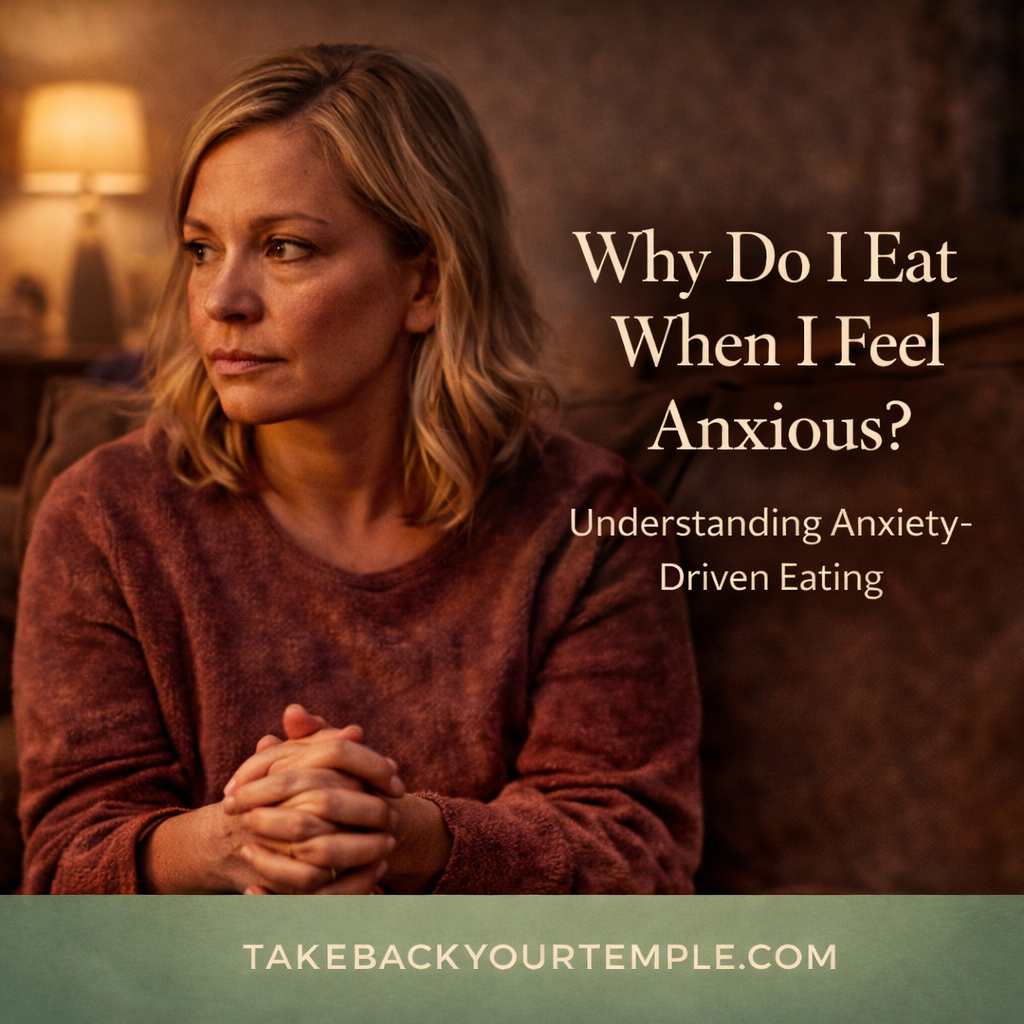
Ever noticed yourself reaching for food when your thoughts felt unsettled?
Not because your stomach needed nourishment.
Because your mind felt restless.
Anxiety has a way of creating pressure inside the body. Thoughts race. Muscles tighten. Breathing becomes shallow. The body searches for relief.
Food can feel calming in those moments.
It offers distraction when worry feels overwhelming.
Many people assume anxiety eating reflects poor discipline. In reality, it often reflects an emotional signal that the nervous system feels overwhelmed or unsettled.
If this pattern feels familiar, understanding the connection between anxiety and eating can bring clarity.
What Is Anxiety Eating?
Anxiety eating occurs when food becomes a response to internal worry, fear, or tension rather than physical hunger.
Anxiety creates:
• Mental tension
• Physical tightness
• Emotional uneasiness
• Restlessness
Food temporarily interrupts these sensations.
Chewing slows breathing. Taste distracts thoughts. Familiar foods feel reassuring.
Yet the relief often fades quickly, leaving anxiety still present.
If your eating increases during nighttime hours, this pattern may connect to nighttime anxiety cycles.
→ Related reading:
Why Do I Eat at Night When I’m Not Hungry?
Why Anxiety Triggers the Desire to Eat
Anxiety activates the body’s alert system.
When worry rises, the nervous system prepares for action.
Even when no immediate danger exists, the body still feels unsettled.
Food provides:
• Sensory distraction
• Temporary calm
• A pause from racing thoughts
This response becomes stronger when anxiety occurs frequently.
Over time, eating becomes associated with emotional relief.
Common Situations That Trigger Anxiety Eating
Anxiety eating rarely happens without a reason.
It often appears during:
• Uncertainty about the future
• Financial pressure
• Health concerns
• Relationship tension
• Heavy responsibility
• Fear of making mistakes
These situations create mental pressure that seeks release.
Many people notice anxiety eating increases during seasons of change.
This pattern frequently overlaps with stress-driven eating.
→ Related reading:
Why Do I Eat When I Feel Stressed?
Anxiety Eating Often Happens During Quiet Moments
Anxiety does not always appear during activity.
It often intensifies during stillness.
Evenings. Late nights. Moments of solitude.
When distractions fade, worry becomes louder.
Food becomes a way to quiet internal tension.
This pattern strongly connects to boredom eating.
→ Related reading:
Why Do I Eat When I’m Bored?
Anxiety Can Create Physical Sensations That Feel Like Hunger
Anxiety affects the body physically.
You may experience:
• Tightness in the chest
• Shallow breathing
• Restlessness
• Stomach discomfort
These sensations sometimes feel similar to hunger.
Food becomes a response to physical discomfort rather than nutritional need.
Understanding the difference between emotional tension and physical hunger creates awareness.
Pause and ask:
What am I worried about right now that I have not spoken aloud?
Anxiety often grows when worries remain unexpressed.
Naming concerns reduces their intensity.
The Healing Insight Audit helps uncover emotional patterns that contribute to anxiety-driven eating behaviors.
→ Begin here: Take the Healing Insight Audit
Anxiety Eating Often Connects to Fatigue and Exhaustion
Anxiety drains energy.
Even when sleep occurs, mental fatigue remains.
Exhaustion weakens emotional resilience.
Food becomes appealing because it feels easier than coping with continued tension.
This pattern strongly overlaps with tiredness eating.
→ Related reading:
Why Do I Eat When I Feel Tired?
Anxiety Eating Can Become a Habit of Self-Soothing
Over time, eating becomes a learned response to anxiety.
Instead of addressing worry directly, food becomes the familiar path toward relief.
This pattern often develops gradually.
Repeated responses create emotional habits.
Recognizing these patterns opens the door to meaningful change.
If comfort eating appears during anxious moments, this article may help deepen understanding.
→ Related reading:
Why Do I Eat for Comfort?
When Anxiety Eating Becomes a Pattern
Occasional anxiety eating happens to many people.
Repeated anxiety eating often signals:
• Chronic worry
• Emotional overload
• Lack of rest
• Mental fatigue
• Ongoing uncertainty
These patterns deserve attention.
Recognizing anxiety-driven eating is an important step toward restoration.
If anxiety eating happens frequently, identifying emotional triggers provides clarity.
→ Continue reading:
7 Emotional Triggers Behind Anxiety Eating
How Anxiety Eating Connects Across Emotional Patterns
Anxiety eating rarely exists alone.
It often overlaps with:
• Stress eating
• Comfort eating
• Tiredness eating
• Night eating
• Boredom eating
Understanding overlap patterns helps reveal emotional needs beneath eating behaviors.
Anxiety eating often reflects internal tension rather than physical hunger.
Your body may be responding to worry, pressure, or emotional fatigue.
The Healing Insight Audit helps identify emotional roots behind eating patterns and provides a faith-aligned starting point toward healing.