

Do you ever wonder, “Why Do I Eat When I Feel Stressed?” Many women eat when they feel stressed because stress creates internal pressure from which the body wants relief. Food can calm tension briefly, interrupt mental strain, and create a moment of comfort. This is often called stress eating, but underneath it is frequently a signal that the body feels overloaded, tight, or worn down.
Stress eating is rarely about weakness. It is often about pressure that has not yet been released.
When that pressure builds through the day, food can feel like the fastest path to relief.
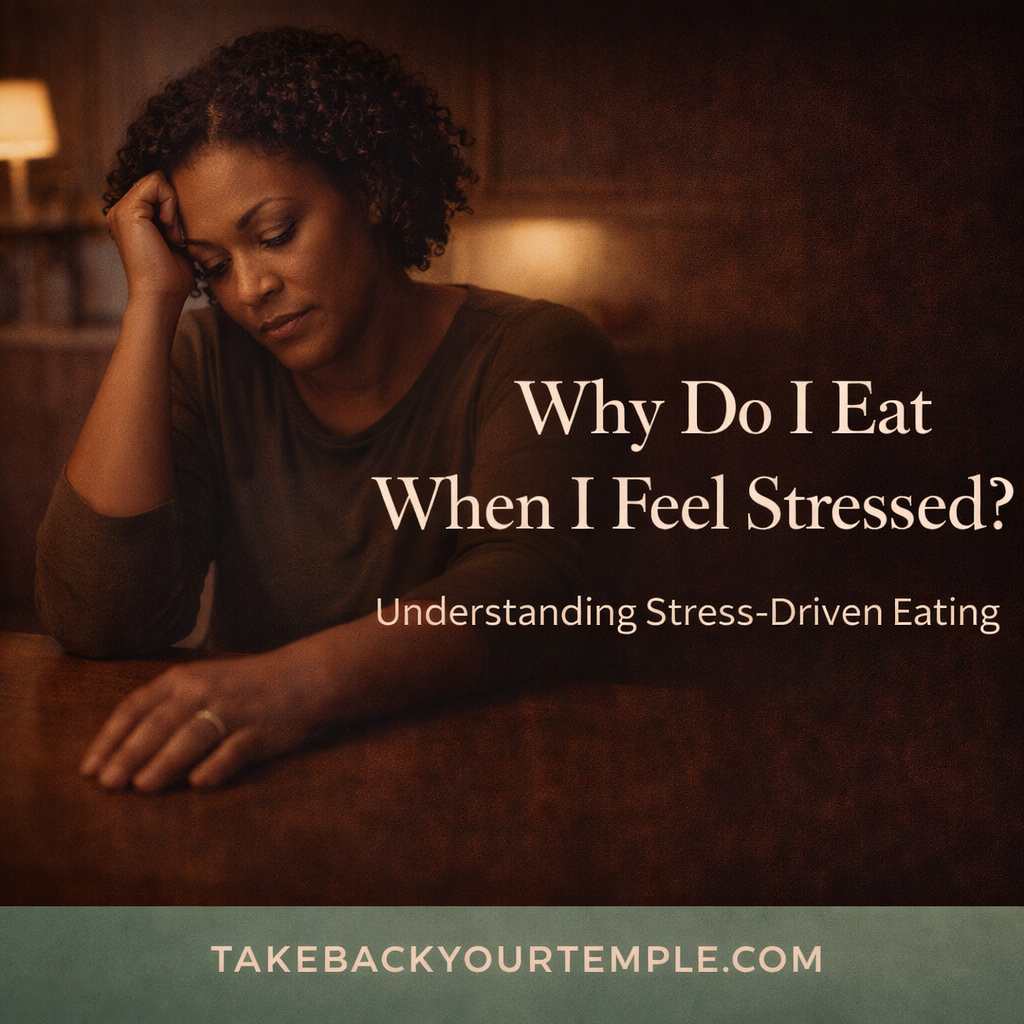
I Did Not Think I Was a Stress Eater at First
For years, I believed my eating had everything to do with hunger and discipline.
I told myself I needed stronger willpower.
I thought I needed tighter rules.
I believed that if I stayed focused, I would gain control eventually.
Yet the moments that pulled me toward food rarely happened in peaceful settings. They showed up after pressure.
After long days as a Registered Nurse.
After emotional strain.
After tension that had quietly built in my shoulders, my thoughts, and my body.
Food became a pause button.
A moment of quiet.
A small sense of relief.
At the time, I thought the food was the problem.
Later, I began to understand something deeper.
The pressure was the signal.
Stress Eating Is Often a Response to Pressure, Not Physical Hunger
Physical hunger builds gradually.
It usually comes with physical signs such as:
• stomach emptiness
• gentle hunger cues
• readiness to eat a full meal
• satisfaction after eating
Stress eating often feels very different.
It can feel:
• sudden
• emotionally urgent
• connected to tension
• focused on comfort foods
• present even after a meal
Many women describe reaching for food after:
• a hard conversation
• a demanding task
• emotional strain
• decision fatigue
• caregiving responsibilities
• unresolved tension
If this pattern sounds familiar, you may also recognize similar moments described in Why Do I Eat When I’m Not Hungry, where eating shows up without physical need.
These patterns share a common root.
Internal pressure seeks relief.
What Stress Does to the Body
Stress does more than affect thoughts.
It affects the body.
Many women carry stress physically without realizing it.
Stress often creates:
• muscle tension
• shallow breathing
• tight shoulders
• jaw clenching
• mental noise
• emotional urgency
• internal vigilance
Over time, this pressure accumulates; it rarely disappears on its own.
Without release, the body begins searching for comfort.
Food can feel like the easiest path to soften tension, even for a moment.
This is why stress eating often increases after days filled with responsibility or emotional strain.
It is also why stress connects to patterns described in Why Do I Feel Overwhelmed All the Time frequently, where pressure builds without enough margin for recovery.
Why Food Feels Like Relief During Stressful Moments
Food offers several kinds of relief at once.
It can provide:
• distraction from emotional pressure
• sensory comfort
• predictability
• pleasure
• temporary calm
• a moment of pause
These effects feel real.
They bring relief.
Even if the relief is temporary, it feels meaningful in the moment.
This is one reason stress eating can repeat.
The body remembers the brief sense of ease.
It begins to associate food with comfort and release.
That association can strengthen when stress becomes frequent.
When pressure rises, the body looks for familiar ways to settle.
Food becomes one of the fastest responses available.
The Emotional Signals Beneath Stress Eating
Stress is often a surface word. Underneath stress, many women carry deeper signals such as:
• pressure
• responsibility overload
• resentment
• fatigue
• lack of personal space
• emotional crowding
• fear of disappointing others
• constant vigilance
• tension that never fully releases
These signals do not always appear dramatic.
Many women function well while carrying heavy internal load.
They continue serving.
They continue giving.
They continue meeting responsibilities.
Yet inside, pressure continues to rise.
This pressure often connects with patterns described in Why Do I Feel Empty and Eat Anyway, where emotional needs remain unmet while responsibilities increase.
Stress eating often represents accumulated strain rather than sudden weakness.
Some women are not eating because they lack discipline.
They are eating because pressure has built steadily through the day.
This pattern often looks like:
• carrying responsibility without pause
• responding to everyone else’s needs
• postponing personal care
• holding tension in the body
• pushing through fatigue
• reaching food when pressure feels too heavy
The eating itself becomes a release valve.
A moment of relief.
A short pause in the strain.
Yet the deeper signal often sounds like this:
“I need relief.”
“I need space.”
“I need exhale.”
Food becomes the response when no other release pathway is available.
Recognizing this pattern brings clarity.
Clarity opens the door to wiser responses.
If this explanation feels familiar, you may already be seeing patterns that once felt confusing. The Healing Insight Audit helps you uncover what your body has been responding to and why stress eating keeps returning.
How to Respond When You Want to Eat Because You Feel Stressed
When stress triggers the urge to eat, the goal is not punishment but understanding.
A wise response begins with awareness.
Consider these steps:
1. Pause Before Acting
Give yourself a few moments.
Let the urgency settle slightly.
2. Check for Physical Hunger
Ask:
Would I eat a balanced meal right now?
- If the answer is yes, your body may need fuel.
- If the answer is no, the signal may be emotional or physical pressure.
3. Release One Area of Tension
Try:
• relaxing your shoulders
• unclenching your jaw
• taking slow breaths
• standing and stretching
• walking briefly
Small releases reduce pressure.
Reduced pressure reduces urgency.
4. Offer the Body a Calming Alternative
Consider:
• warm tea
• quiet reflection
• gentle movement
• stepping outside
• sitting in stillness
These responses support relief without relying solely on food.
If true hunger is present, choose a steady meal.
If pressure is present, choose release.
This distinction changes outcomes over time.
What the Bible Says About Stress, Burdens, and Relief
Scripture consistently invites believers to bring burdens before God.
In Matthew 11:28, Jesus says:
“Come to Me, all you who labor and are heavy laden, and I will give you rest. Take My yoke upon you and learn from Me, for I am gentle and lowly in heart, and you will find rest for your souls. For My yoke is easy and My burden is light.”
This invitation reflects more than spiritual comfort.
It reflects wise stewardship of the burdens we carry.
In 1 Peter 5:7, we are instructed:
“casting all your care upon Him, for He cares for you.”
Stress eating often begins where burdens remain unspoken and unreleased.
God’s design includes relief.
Peace grows when burdens are acknowledged and released rather than stored inside the body.
Self-control strengthens when pressure decreases.
Relief and discipline grow together.
When Stress Eating Becomes a Repeated Pattern
Occasional stress eating happens.
Repeated stress eating signals something deeper.
When eating becomes the main way to manage pressure, the pattern can strengthen.
Over time, this may lead to:
• frequent overeating
• loss of eating rhythm
• increased fatigue
• emotional exhaustion
• cycles of guilt and frustration
If stress repeatedly leads to eating, you may benefit from exploring the deeper framework outlined in How to Stop Binge Eating as a Christian: Understanding the Signal Behind the Struggle.
Understanding the signal changes the response.
Changed responses reshape patterns.
Stress and Night Eating Often Travel Together
Many women carry stress quietly through the day.
Evenings bring stillness.
Responsibilities slow.
Pressure surfaces.
Food becomes appealing.
This pattern frequently overlaps with those described in Why Do I Eat at Night When I’m Not Hungry, where evening eating reflects accumulated tension rather than hunger.
Stress that remains stored through the day often seeks release at night.
Evening eating becomes the outlet.
Recognizing this connection builds awareness.
Awareness leads to change.
Stress and Fatigue Often Overlap
Stress drains energy and fatigue lowers resilience.
When both exist together, the urge to eat increases.
Many women describe feeling:
• tired
• mentally worn
• emotionally drained
• physically tense
These patterns closely connect with those explored in Why Do I Eat When I Feel Tired, where exhaustion drives the search for quick comfort.
When fatigue increases, the body seeks the fastest relief available.
Food often feels accessible.
Understanding this overlap helps reduce confusion.
It also supports wiser responses.
Final Encouragement
If you find yourself eating when you feel stressed, you are not alone.
Many women carry more than they release.
They serve others.
They meet responsibilities.
They keep moving forward.
Pressure accumulates quietly.
Food becomes the moment of relief.
Your body may be communicating something important.
It may be asking for:
• relief
• rest
• space
• care
• wisdom
• support
Learning to recognize stress as a signal builds clarity.
Clarity supports wise response.
Wise response strengthens stewardship.
Peace grows when pressure is acknowledged rather than ignored.
Frequently Asked Questions
Why do I eat when I feel stressed even when I am not hungry?
Stress can create internal pressure that feels urgent. Food may provide temporary comfort, distraction, or calming even when the body does not require fuel. The urge often reflects tension rather than hunger.
Is stress eating the same as binge eating?
Stress eating and binge eating are related but not identical. Stress eating may involve smaller amounts of food, while binge eating typically includes loss of control and larger amounts in a short amount of time. Repeated stress eating can develop into binge patterns over time.
How can I tell the difference between hunger and stress eating?
Physical hunger builds gradually and responds well to balanced meals. Stress eating usually feels sudden, emotionally urgent, and connected to tension or pressure rather than stomach hunger.
Can Christians struggle with stress eating and still grow in self-control?
Yes. Many Christians grow in self-control as they learn to understand the signals behind their eating and respond with wisdom, prayer, and stewardship rather than shame.
What should I do before eating when I feel stressed?
Pause briefly. Check for physical hunger. Relax one area of tension. Ask what kind of care your body needs in that moment. Choose nourishment if hunger is present. Choose release if pressure is present.
Can stress make nighttime eating worse?
Yes. Stress often accumulates through the day and seeks relief in the evening. This is why nighttime eating frequently follows stressful days.