

You may ask, “Why do I feel empty and eat anyway?” Many women feel empty and eat anyway because emotional strain, loneliness, or mental fatigue creates inner discomfort that the body tries to relieve. This is often called emotional hunger. Unlike physical hunger, food does not satisfy emotional hunger for long. Understanding this difference helps you respond with clarity instead of confusion or shame.
If eating when you feel empty is unsettling, these emotional signals may provide clarity:
→ Read next: 7 Emotional Triggers Behind Empty Eating
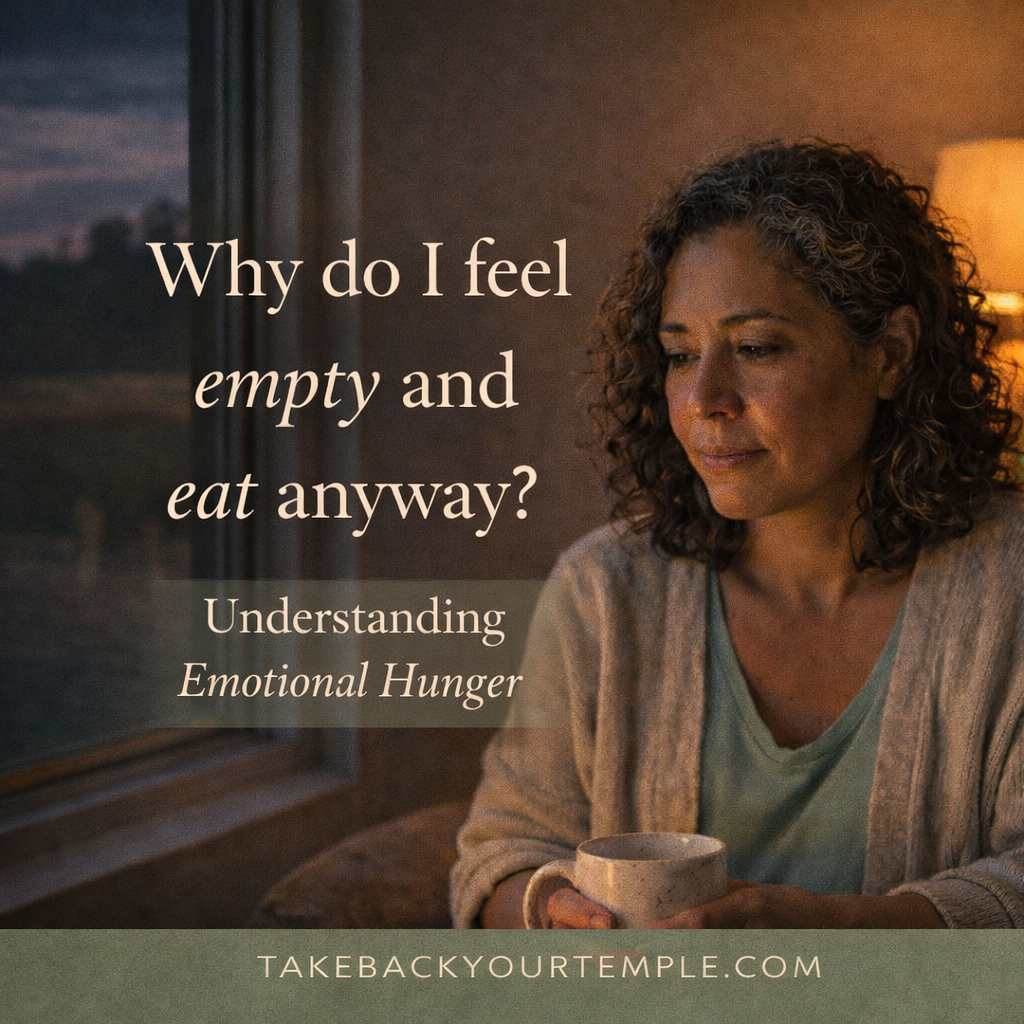
There is a feeling many women do not talk about.
It is not always loud.
It does not always have a clear name.
But it shows up in quiet moments.
A sense of emptiness.
You may not be physically hungry.
You may have already eaten.
And yet, something inside still feels unsettled.
So you reach for something.
A snack.
A bite.
Something to take the edge off.
And for a moment, it works.
But the feeling returns.
If you have ever asked,
Why do I feel empty and eat anyway?
You are not alone.
And you are not broken.
Emotional Hunger vs Physical Hunger
Understanding emotional vs. physical hunger begins with one simple distinction.
Physical hunger develops gradually.
- It builds over time.
- It can be satisfied with a variety of foods.
- It leaves you feeling nourished and settled.
Emotional hunger feels different.
- It comes on quickly.
- It often craves specific foods.
- It is tied to a feeling rather than a physical need.
And most importantly, it does not last.
Even after eating, the emptiness can remain.
That is because food was never meant to fill what emotional hunger is asking for.
Emotional emptiness often reflects a longing for something deeper than food can provide. When the heart feels empty, remembering the truth of who Christ is can restore hope. The article 13 Reasons Why We Follow Jesus offers powerful reminders of the purpose and peace found in walking closely with Him.
Why Emptiness Leads to Eating
Emptiness often carries a sense of heaviness that settles quietly in the heart. This emotional weight can increase the desire for comfort through food. If this sounds familiar, How to Lift the Spirit of Heaviness offers scriptural encouragement for breaking through discouragement and restoring strength.
Emptiness is often a signal that something inside has not been fully processed or expressed.
It can come from:
- Loneliness
- Emotional fatigue
- Unspoken stress
- A long day of responsibility
- Feeling unseen or unsupported
When these states build over time, the body begins to look for relief.
Food can temporarily soothe the nervous system, which is why eating can feel comforting in the moment.
But because the root need is not physical, the relief does not last.
The Moment Most People Miss
There is usually a small moment before eating:
A pause.
A feeling.
A subtle sense of discomfort.
Most people move past that moment quickly.
They reach for food without realizing the feeling to which they are responding.
But that moment is important because it is where awareness begins.
And awareness creates the opportunity for a different response.
How This Connects to Everyday Eating Patterns
This pattern often shows up in familiar ways.
- Eating when not physically hungry
- Reaching for food after a long day
- Late night eating when the house becomes quiet
If this sounds familiar, you may also recognize this pattern here:
Why Do I Eat When I’m Not Hungry
If you feel overwhelmed often and eat to soothe those feelings, you may find this article insightful:
Why Do I Feel Overwhelmed All the Time
And for many women, this same experience becomes stronger in the evening:
Why Do I Eat at Night When I’m Not Hungry
Understanding these patterns together brings greater clarity.
A Faith Perspective on Emptiness
Scripture speaks to the deeper needs of the heart.
In John 6:35, Jesus said:
I am the bread of life. He who comes to Me shall never hunger, and he who believes in Me shall never thirst.”
There is a kind of hunger that food cannot satisfy.
Emotional emptiness often points to a deeper need for rest, connection, and spiritual nourishment.
Emotional emptiness also sometimes reflects a heart that has grown guarded over time. Pain, disappointment, or repeated strain can create distance within the heart. If emotional shutdown feels familiar, Ministering to a Hard Heart offers guidance for restoring tenderness and emotional openness.
This does not mean you have failed; it means your body and soul are asking for something real.
Learning to Recognize the Signal
When the urge to eat appears without physical hunger, pause for a moment.
Ask a simple question:
What am I feeling right now?
You may notice:
- Tired
- Lonely
- Overwhelmed
- Mentally drained
Naming the feeling begins to reduce its intensity.
It also helps you respond with intention instead of reacting automatically.
A Gentle Way to Understand Your Eating Signals
Many women discover that emotional eating becomes easier to address once they understand the signals behind it.
The Healing Insight Audit is a short guided reflection designed to help you recognize the emotional and physical patterns behind your eating habits.
In about 15 minutes you can:
- Identify emotional triggers
- Recognize stress signals in your body
- Understand the pressure beneath late night eating
- Begin responding with clarity instead of shame
You can begin the Healing Insight Audit here.
You Are Not Broken
If you have been eating to fill a sense of emptiness, you are not broken.
You are responding.
Your body is communicating.
And that communication can be understood.
When you begin to recognize emotional hunger for what it is, something begins to shift.
The pattern loses its power.
The moment slows down.
And a new response becomes possible.
Explore the full Christian Emotional Eating guide.
Frequently Asked Questions
What is emotional hunger?
Emotional hunger is the desire to eat driven by feelings rather than physical need. It is often connected to stress, loneliness, or emotional fatigue.
Why does eating not fix the feeling of emptiness?
Because the need is not physical. Food can temporarily soothe the body, but it cannot address emotional or spiritual needs.
How can I tell if I am emotionally hungry?
Emotional hunger often comes on quickly, craves specific foods, and remains even after eating.
What should I do instead of eating?
Start by identifying what you are feeling. Awareness creates space for a different response and helps reduce automatic eating patterns.
This program was the answer to my prayers of many years. I recommend it very highly. Thank you Kim. You’re an amazing blessing!
Hannah, thank you so much for sharing this. I’m grateful the Lord met you in this and brought you the clarity and peace you had been seeking.