

Many believing women are wondering, “Is overeating a sin?” Overeating can become sinful when it reflects a pattern of turning to food for comfort, escape, or control instead of God, especially when it involves a loss of self-control. However, not every instance of overeating is sin. The Bible focuses on the condition of the heart and invites believers into self-control, awareness, and restoration rather than condemnation.
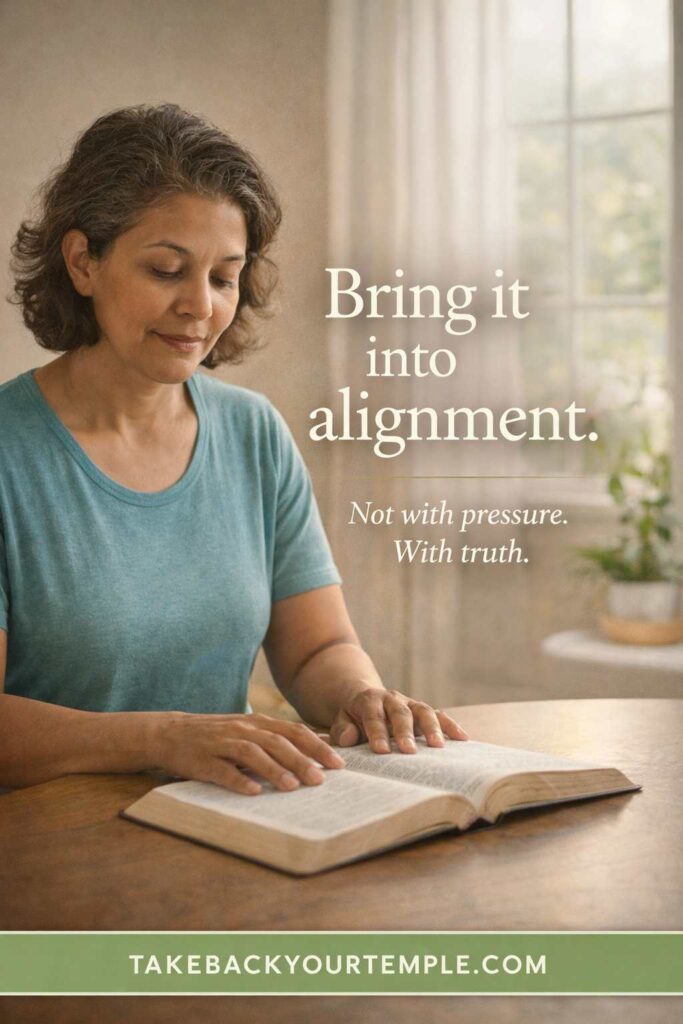
This is a question many women quietly carry.
Is overeating a sin?
Sometimes it comes after a moment that feels out of control.
Sometimes it comes with guilt.
Sometimes it comes with confusion.
You love God.
You want to honor Him.
And yet, you find yourself eating in a way that does not feel aligned.
So the question becomes:
Am I doing something wrong?
Or is there something I do not yet understand?
What the Bible Actually Says About Overeating
The Bible does not reduce this issue to a simple yes or no.
Instead, it speaks to:
• self-control
• stewardship
• what rules the heart
Scripture warns about patterns of excess:
Do not mix with winebibbers, Or with gluttonous eaters of meat;”
Proverbs 23:20 NKJV
It also speaks clearly about mastery:
But I discipline my body and bring it into subjection…”
1 Corinthians 9:27 NKJV
And it gives insight into misplaced focus:
“…whose god is their belly…”
Philippians 3:19 NKJV
These verses are not meant to shame; they are meant to reveal when something has moved out of alignment.
When Overeating Becomes a Spiritual Issue
Overeating becomes a concern when it reflects a deeper pattern.
Not just what you eat, but why.
It may look like:
• eating to escape emotional discomfort
• turning to food instead of bringing needs to God
• feeling a repeated loss of control
• using food to manage stress, pressure, or emptiness
At that point, the issue is no longer just physical.
It becomes a matter of what you are relying on for relief.
The Heart Behind the Behavior
Many women assume the problem is lack of discipline.
But often, the behavior is a response.
A response to:
• overwhelm
• emotional strain
• internal pressure
• unprocessed feelings
If you have ever felt this, you may recognize it here:
Why Do I Eat When I’m Not Hungry
or in the quiet moments of the evening:
Why Do I Eat at Night When I’m Not Hungry
And sometimes, it goes even deeper:
Why Do I Feel Empty and Eat Anyway
How to Stop Binge Eating as a Christian
Understanding this changes how you see the behavior.
Conviction vs Condemnation
This distinction is critical.
Conviction is specific and leads you toward change.
Condemnation is heavy and leaves you feeling stuck.
Conviction says:
This is not the path I have for you.
Condemnation says:
Something is wrong with you.
God corrects in a way that restores.
He does not trap you in cycles of shame.
Why This Pattern Keeps Repeating
If the root issue is not addressed, the pattern continues.
You may try to:
• eat less
• control portions
• use more willpower
But if the body is still carrying tension or emotional strain, it will continue to seek relief.
That is why understanding what is happening beneath the behavior matters.
A Clear Path Forward
The goal is not to label yourself.
The goal is to understand what is happening and respond differently.
When you begin to:
• recognize emotional triggers
• understand your body’s signals
• bring what you are carrying to the Lord
You create space for change.
This is not about perfection.
It is about alignment.
A Practical Next Step
If you want to understand why your eating patterns keep happening and what your body may be responding to, the Healing Insight Audit can help you begin that process.
In about 15 minutes, you can identify:
• what is driving your eating
• where pressure may be building
• how to begin responding with clarity and peace
You can begin here:
Start the Healing Insight Audit
You Are Not Stuck
If you have been struggling with this, you are not alone.
And you are not without help.
When you begin to see both the spiritual and emotional layers of what is happening, something shifts.
You move from:
confusion → clarity
pressure → understanding
reaction → response
And that is where real change begins.
Frequently Asked Questions
Is overeating always a sin?
No. Overeating becomes a concern when it reflects a repeated pattern of turning to food instead of God or losing self-control.
What does the Bible say about gluttony?
The Bible warns against excess and lack of self-control, pointing to the heart and what governs a person’s choices. You may find this article insightful: Freedom from the Spirit of Gluttony.
Why do I feel guilty after eating?
Guilt can come from conviction or from internal pressure and expectations. Understanding the difference helps you respond in a healthy way.
How can I stop overeating as a Christian?
Begin by understanding the emotional and physical triggers behind your eating and learning to respond with awareness, self-control, and reliance on God.